It didn’t take long for my experiences in Saudi Arabia to jolt me into realising that the Eurocentric world vision is just as limited as any other, and that I too had been influenced by a whole lot of nonsense about ‘the Magic Kingdom’.
For a start, most of the Saudis I met in my three years there – in three very different regions – were welcoming, warm, and fun.
What was more challenging about Saudi Arabia, however, was living with 250 other English language instructors in a gated university campus just outside the capital, Riyadh.
You had to be a certain feisty type of Western woman to choose to work in what at that time was a hermetic country, to arrive there alone, and comply with the prison-like restrictions of the contract. And of course it’s the feisty among us that find it most difficult to obey rules.
For example, you couldn’t get back out of the country unless three of your bosses authorised it with their signatures. You could be dismissed within minutes though, and deported on the next flight out. Your visa was in the hands of your employers, you had to share an apartment with a colleague you’d never met, you couldn’t be seen with a man in a public place, and on top of all that, it was forbidden to discuss various key topics in the classroom ( outside it too, so it was not dissimilar to the United States at the moment ). Also, women weren’t allowed to drive then, and there was no Uber, and no public transport.
The reason of course most of us went to Saudi Arabia – and happily signed our contracts – was the time-honoured immigrant worker’s pursuit of money, but the country attracted people for other motives too, which became clearer as the months went by.
‘Look, you don’t actually have to speak, you know. They’re there to talk about themselves and won’t listen to a word you say anyway.’
Sherry Lee and I were having coffeee at an uninteresting café in Saudi Arabia, in the town of Buraidah, in the isolated region of Qassim, known (to few) for its camel market and dates.
The end of the month was arriving fast and Sherry Lee was short of cash.
‘I’ve been doing it since I got here. But only at the end of the month, though, when I want a bit of fine dining and I’m low on the bucks’.
Sherry Lee was quick-witted and entertaining, not too great in the looks department, and enjoyed a certain cachet – or renown at least – in expat teaching circles throughout Saudi Arabia because she’d once been driven into such a tantrum by the students that she’d grabbed a girl’s phone from her desk and smashed it to pieces on the classroom floor.
This had caused great hilarity and feigned outrage from the students, of course, and Sherry Lee was sacked on the spot and ushered onto the next plane out of the country….only to briefly dust herself down back in the States, find another job in another town in Saudi and start afresh a few months later.
So we were having coffee in that ‘other town’, Buraidah, and Sherry Lee was trying to persuade me to join her in her latest scheme, which was going onto some kind of dating site ( at that time forbidden in the kingdom), hounding out an unwitting Saudi guy who was lonely and keen to speak English, and getting a free meal in a fancy restaurant as the reward.
‘Aw c’mon. Women- and men too – do this all the time all over the world ! It’ll be much more fun if there’s four of us. A double date. Awesome ! You don’t have to put on the slap, just try to be kinda nice, and interested in their jobs or whatever it is they’re talking about.’
I quite liked Sherry Lee, but not this side of her, which to me seemed merciless and cynical.
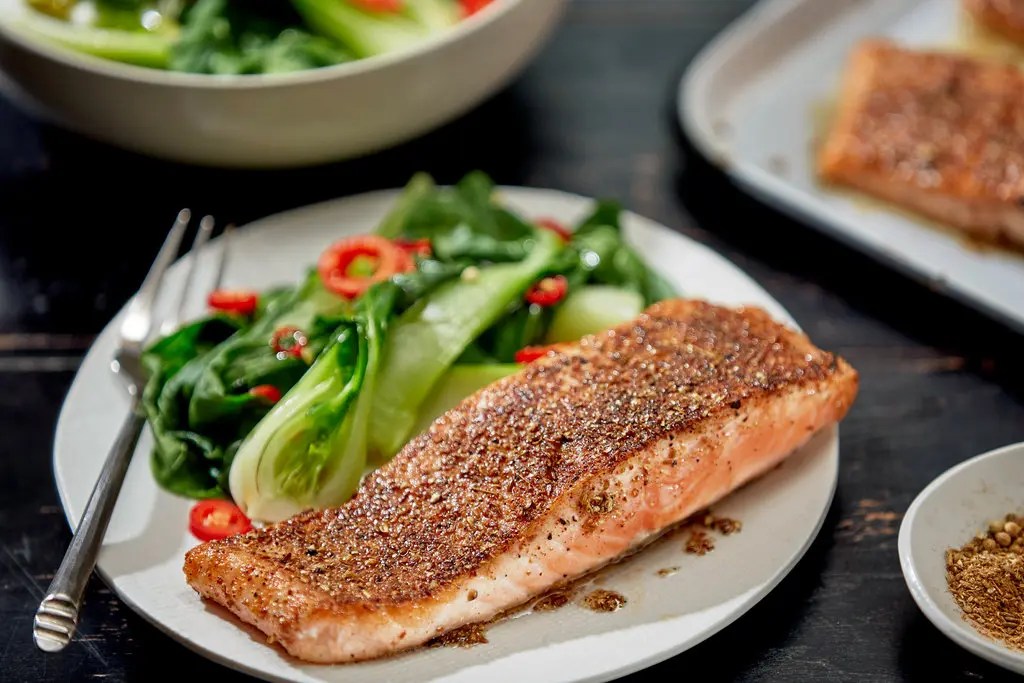
‘Think about it, hon – it’s a win-win. The guy gets someone to listen to him, and to speak English, and you get the fine dining. They’ve got fresh salmon at that new place downtown! Yay !’
Needless to say I did not join her on her little monthly dinner dates, maybe not due to any moral high ground posturing, but more because I knew I couldn’t sit through an entire evening listening to anyone talking about their job, no matter how fine the dining, or how attractive the companion.
I must admit though, that I found Sherry Lee’s crafty inventiveness quite fascinating, even though it was cruel.
…. so I’m 67 , which feels like the old 90 at times, and I’m told by one or two younger friends that I should be feeling guilty because we Baby Boomers are the last generation to be getting a state pension, but that’s not my concern here. My focus now is on how to get and nurture a postitive approach to this retirement lark. Some of it is great, but a lot is not.
It’s not as if I’d been doing some ghastly job for 40 years that I was dying to give up so I could start gardening or golfing. In fact, the well-meaning but rather insulting suggestions – often made by the young, or those who actually can’t wait to stop working – of taking up a hobby, joining a club or having a walk in the mountains are all nails in the coffin to me, so I won’t be doing them. At least not for a while, because I’ve started attending classes in the Faculty of Arts at my local university here in Italy.
My classmates are about 45 years younger than me, and I’m more or less twice the age of the professors but it’s testament to everyone’s good natures that I don’t feel too awkward or unwanted. A few kind fellow students have offered to give me the reading lists, one or two say hello to me in the corridors, and the professors are courteous and welcoming. Some are gifted at teaching and passionate about their subjects, and the classes are dinky small.
This week, one lecturer even mentioned almost to the word, phrases delivered to me as a university undegraduate 50 years ago (at Aberdeen University, Scotland ) : ‘all art is selection and rejection, Apollo over Dionysus, order over disorder.’ Nothing new under the sun in this case, but I’m enjoying a different angle on familiar concepts, and discovering fresh ones too.
It’s not the architecture, the incense or the stained glass, or – if you’re lucky – a sense of the mystery of life: and it’s not the clergy either.
It’s more that there’s nothing like a good church in a foreign country for getting a sense of where you are, and finding out who else is there too.
If you’re in a big city abroad, going to a chuch service ( or better still, to a social occasion after one) is an excellent way of mixing with people, and very quick and handy if you’re travelling around and feel a bit lonely, even if you don’t have any religious affiliations or beliefs. You can contribute your own participation and presence to any congregation or communtiy, and you’ll get a nice welcome in return.
Going to church abroad is also less stressful than fabricating your best self online, scrolling through dating apps, or sitting awkwardly at Meetups or Internations social events, hoping someone will speak to you or worse, that you don’t have to sit beside someone dull. And if you’re in a country where Christianity is a minority religion (in some places there are secret churches with whispered addresses ), you’ll come across a certain type of person, maybe not the type you normally meet.
The Church of Scotland in Rome, for example, has a lovely congregation and a great terrace with views overlooking the entire city. You’ll get a good international chat up there after the Sunday service. Same if you go to St Joseph’s Cathedral in Hanoi, where it’s easy to fall in with all kinds of people after mass. Then there’s the beautiful St Andrews Church in Tangier ( painted by Matisse ), where you’ll get a warm chat with young Mauritanians and Liberians – along with the local literati – in the garden in its bright sunlight after the service.
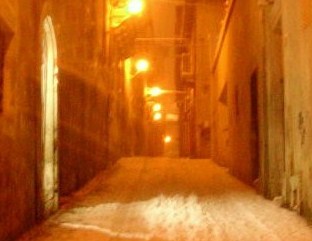
( Dinner in the trattoria ‘Da Rino’ – with the light at the doorway on the left – in Via San Marciano, L’Aquila, the regional capital of Abruzzo, 110 km east of Rome )
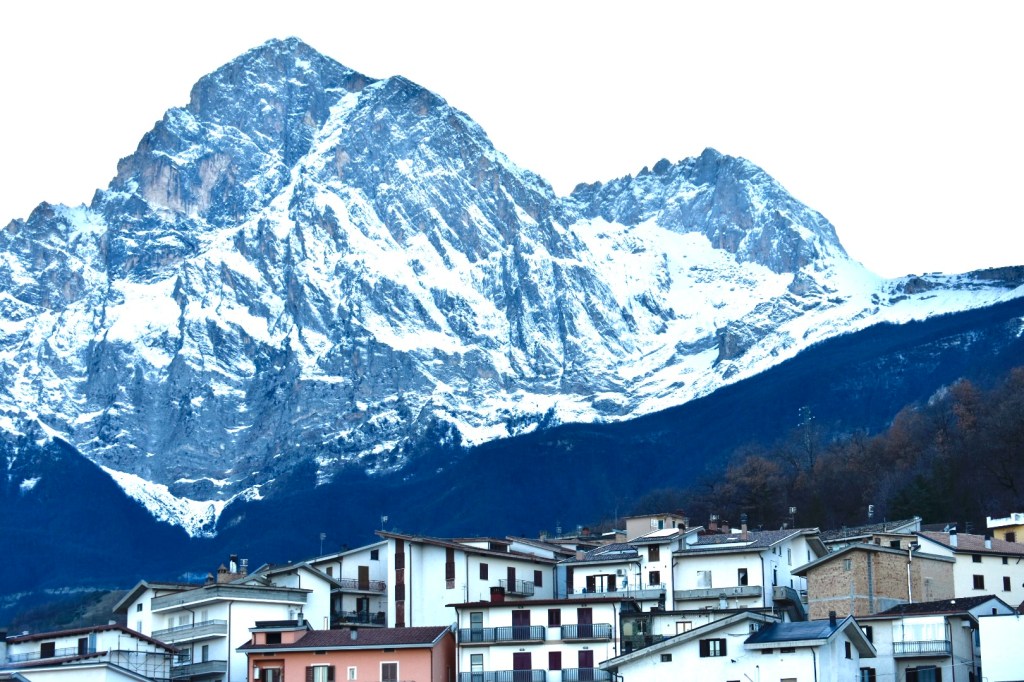
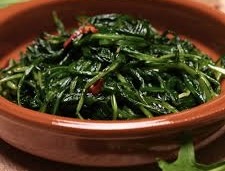
‘Dolce Signora, the delicious, fresh chicory you are about to eat comes from the Gran Sasso – it grows up there, you know, on the highest mountain in the Apennines,’ Rino said, with charming inaccuracy, as he bowed not quite obsequiously at a table of Roman tourists.
The Roman tourists shrieked at how lucky they were to have such special Abruzzo food, and with evident pleasure, mirth and not a little noise, chatted on for quite some time about the merits of life in the provinces.
I was having dinner ( as I often did, and for about two hours every time) with my belovèd friend, Mino, who poured me out another glass of the local red wine, so dark that it stains your tongue if you drink it enough. Rino always left a litre of this vino nero on the table for us and we paid for what we drank, usually the lot .
It was cold and snowy outside, Sunday evening, and the trattoria was busy. The small high windows were beginning to steam up and the two little vaulted rooms glowed with cameradie and pleasure.
There was glass across the top part of the arched wooden doors, with little white cotton curtains held up by narrow brass rods, and every time someone came in, the rods rattled slightly against the thin panes, and heads went up to shout out some welcoming comment to a known face, or a buona sera to a stranger.
‘ E voilà , bella Jo!’
Rino put a triumphant plate of strangolapreti ( ‘priest stranglers’ ) pasta on the white tablecloth in front of me, moving my cigarette packet and other personal odds and ends out of the way to make room for it.
‘ Eat it up now or it’ll get cold and none of your smoking and chattering, ah bella Jo… bella Jo.’
He used the word ‘bella’ for most of his women customers, but even so, it was always endearing (and still is) .
At the table opposite us was a group of young men in overalls, heads bent over their plates, stubby fingers soaking up the remains of food with the customary scarpetta. From time to time the Romans bawled across, engaged them in some inconsequential but friendly chatter and chortled on through their hearty fare.
Mino and I had got onto our main course, castrato (which means what you think, of the sheep family), roast potatoes, spinaci in padella,peperoncino and garlic.
Rino was now amusing other diners by dousing their portions of fresh pineapple rings in the Abruzzese centerbe liqueur. Then with the flourish of a magician, he set the rings alight. Gasps of awe rippled through the trattoria as the turquoise flames flared for a second, then flickered just as quickly to nothing.
Mino and I finished off our vino nero , stood up in the cramped space, and asked for the bill. Rino did all the arithmetic in his head, or sometimes with a few lightning squiggles in ballpoint on a little notepad. He always rounded the price down for us.
Before I left, I went into the kitchen to see his wife, Loredana, the trattoria cook, dishwasher, and peacekeeper. She immediately abandoned her steaming pots and pans, hot water and chopping board to greet me. Her grin showed the little gap between her front teeth, and she wiped her strong hands before shaking mine, on a stained white apron. She asked how my family was and told me her own news, chucked me on the cheek like a child, then kissed me goodbye.
I left to an arrivederci from the entire trattoria and joined Mino back out on the wintry streets to whatever it was that awaited us next.
Silver-tipped cane, brown leather shoes, corduroy trousers, linen jacket, fine woollen v-neck, flannel shirt, Old School tie – all of it slightly worn, though worn with grace: Jono walks onto the stage.
The stage was the Petit Socco square in Tangier, and Jono was walking right down into it with the easy air of the bon viveur.
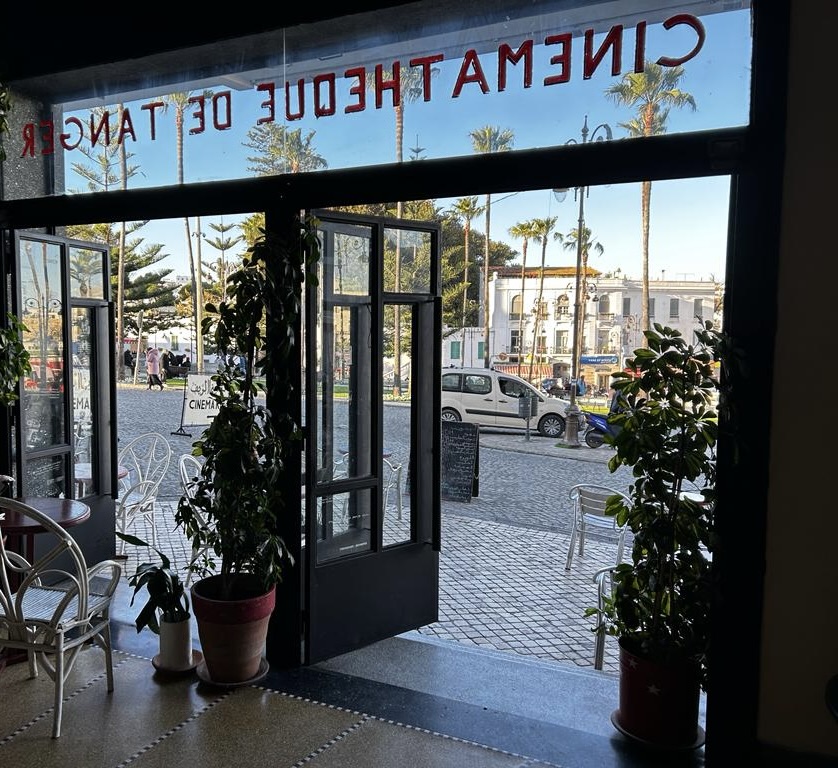
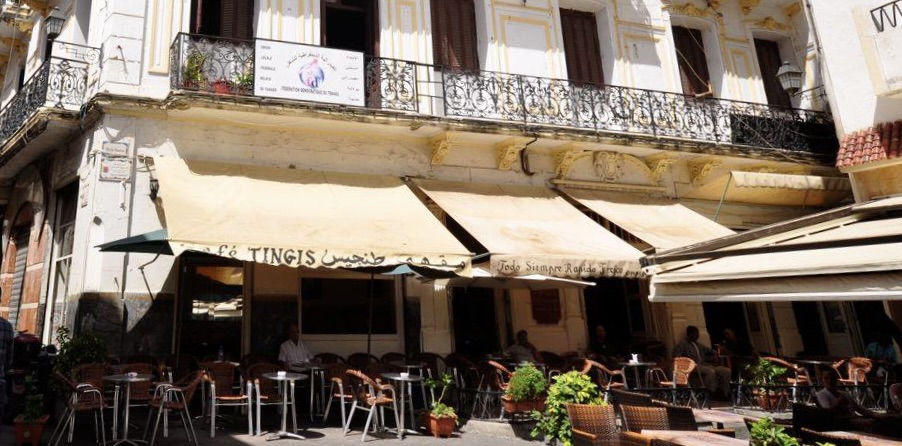
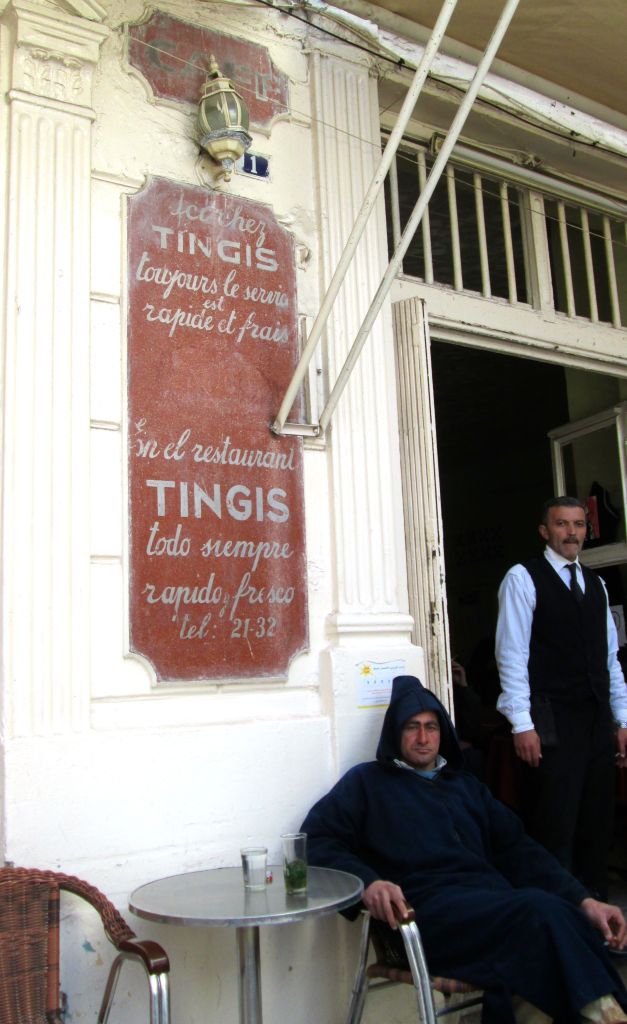
I watched him over the next few days from the Tingis Café, and not long after, found him sitting in the sun at a table next to me at the Cinéma Rif, just up the road in the Grand Socco square.
” I’m Jono, delighted to meet you. I do love this place, don’t you ? “
I liked the affable intimacy of his ‘don’t you? ‘ question, and his English public school vowels, warm voice. He was about 60, blue-eyed, with fine graying hair combed back off his good-natured face. He was tall and fit-looking ( effortlessly so, not in a personal-trainer-at-the-gym way ), and as he talked, he used his hands with leisurely, elegant gestures. His nails were well manicured, and he wore a signet ring on his left pinkie, which he twisted every so often during conversation.
He felt to me like a contented, amenable creature, who wore ‘the world as a loose garment’ (to quote St Francis), and meeting him was exactly the kind of experience I had come to Tangier for.
What might have been called a ‘wizend old crone’ – if it were a woman, and in a different era – gave us a three-toothed smile and uttered a cloying bonjour madame to me. His face was sly and he had an impish physique, though he must have been about 90.
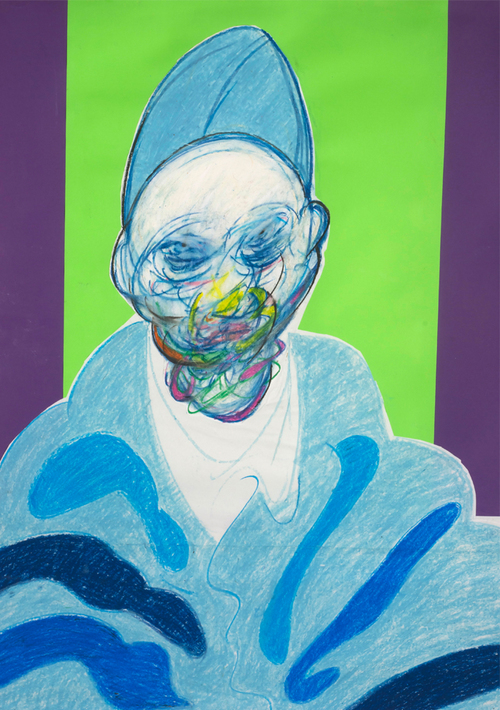
” He was one of Francis Bacon’s lovers, you know. “
I suspect I wasn’t the first person Jono had told this story to, and I was of course thrilled with this unlikely link to genius, but I recoiled slightly because the wizend man crone was beggarly and leering and I wsn’t too keen on any chitchat with him.
Immediatley aware of my uneasiness, and with the mischievousness that was such an attractive part of his character, Jono smiled over at the improbable lothario, who was picking tobacco off his gey lips and about to spit it onto the dirty pavement.
” Ahmed dear – come over here and meet my new friend Jo.”
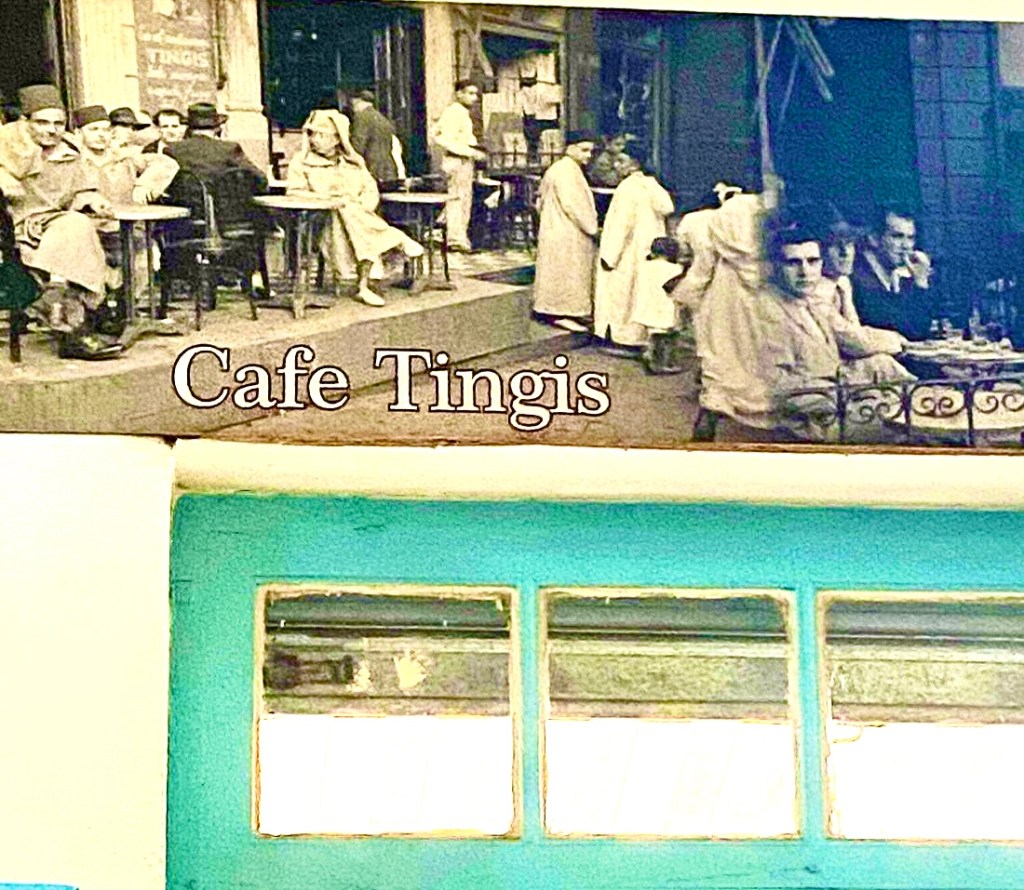
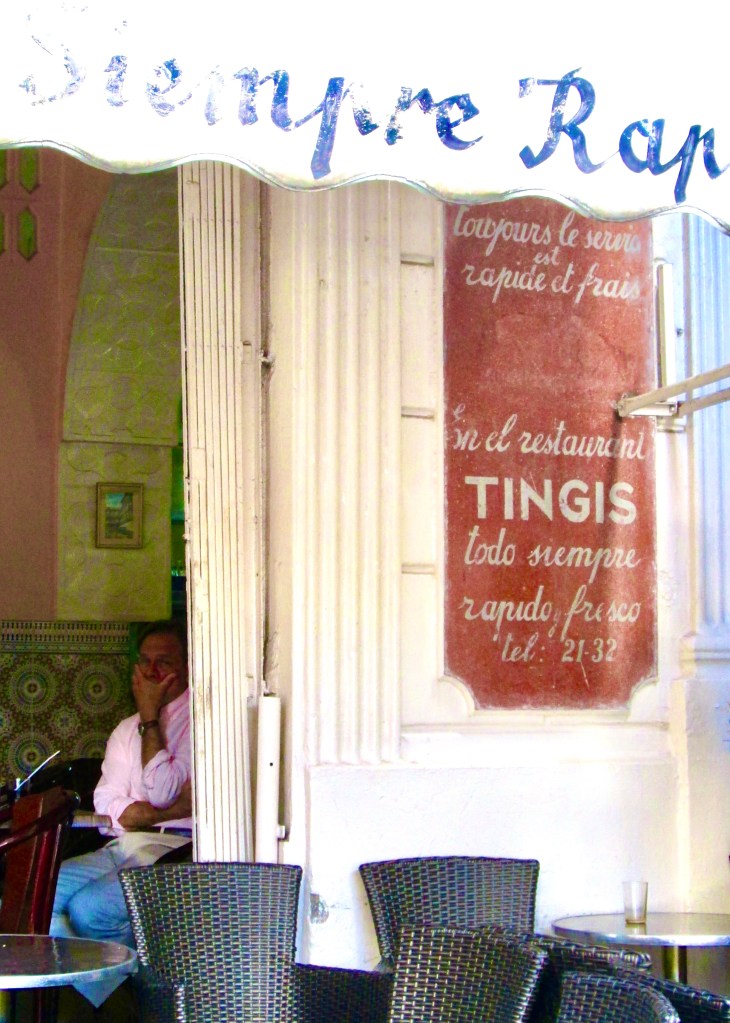
The Cafe Tingis in Tangier had all the exacting prerequsites I needed to practise at length and at leisure my lifetime’s passions; absorbing new places, observing new people, and getting as much chatting done as possible.
Actually, it’s not so much just chatting, it’s proper conversing that I love, at best with a sweeping assortment of people, and preferably for not too long at at a time to avoid boredom for everyone concerned, especially if someone is new to you.
The Café Tingis suited me perfectly as my ‘office’ also because it’s on a square called the Petit Socco, petit enough to offer a variety of potential conversation companions packed into a small space, so I could settle happily at my table for however long I wanted and still experience the variety I cherish.
One of the first people I noticed from my eyrie office was a flamboyant figure with silver-tipped cane striding down into the square. His name was Jono, and he was to share my zinc table at the Tingis most days for the next few weeks.
Arriving in a country for the first time is one of the most exciting experiences I know, and for cities like New York and Istanbul, it’s even more thrilling if you arrive by sea.
The same is true for Tangier.
Once, when I was living and working in Tokyo, my outstandingly handsome Irish colleague Cian told me that for him, the senses are at their keenest when places are experienced in relief.
“It all depends on what comes before, and what comes after,” he said, as we were trying to chopstick-pick through our tiny lunch portions in the university canteen.
“It’s the contrast between places and jobs that makes the experience more intense. My last job was was teaching English to luxury hotel staff on a Thai beach – total opposite to teaching English to university students in Tokyo.”
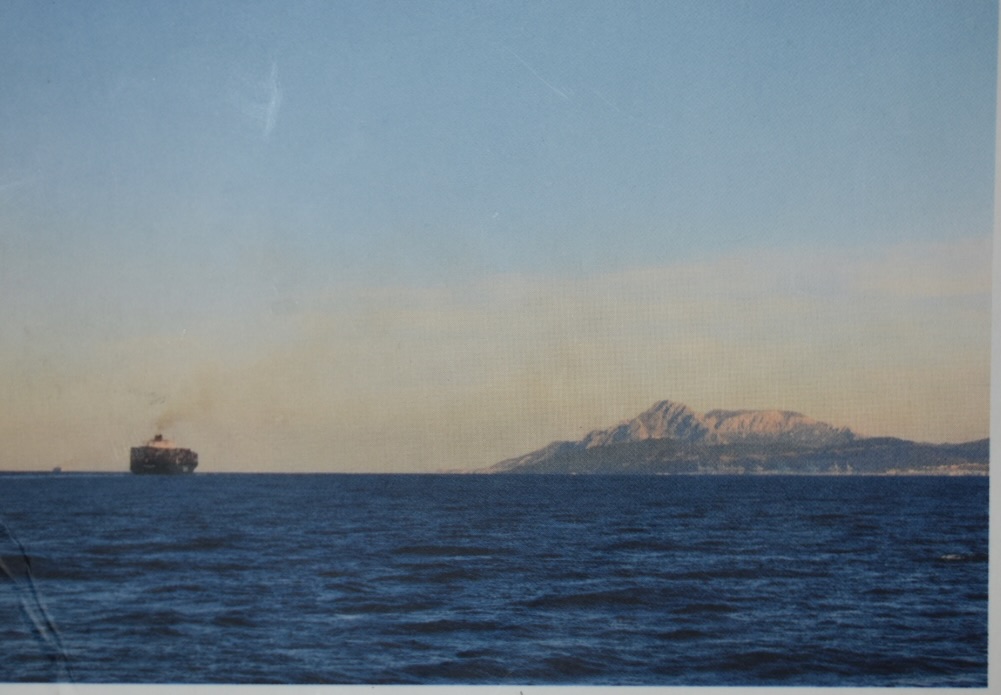
Well, before Morocco, my last job had been freelancing a few hours a week in a little language school in Tarifa (I’d gone there to be with old friends for a while ) in the very south of Spain, just across the water from Tangier. It brought some social engagement into my pretty tiny-town life, and I was fond of the students ( including a coast guard, who gave his class a harrowing presentation in English about his experiences with the immigrants trying to cross into Europe) but there was nothing new or engaging about the work, and Spain was familiar and too easy.
Acquaintances in Tarifa warned me that Tangier was dirty and dangerous, and you never knew ‘what kind of disease you could pick up over there’. Also, you wouldn’t get a minute’s peace throughout your entire stay because you’d be stalked and hounded by ‘toothless sleaze-bombs trying to scam you from morning til night’.
All that sounded like just the kind of place I needed, and it was just the kind of contrast Cian had been talking about that day in Tokyo.
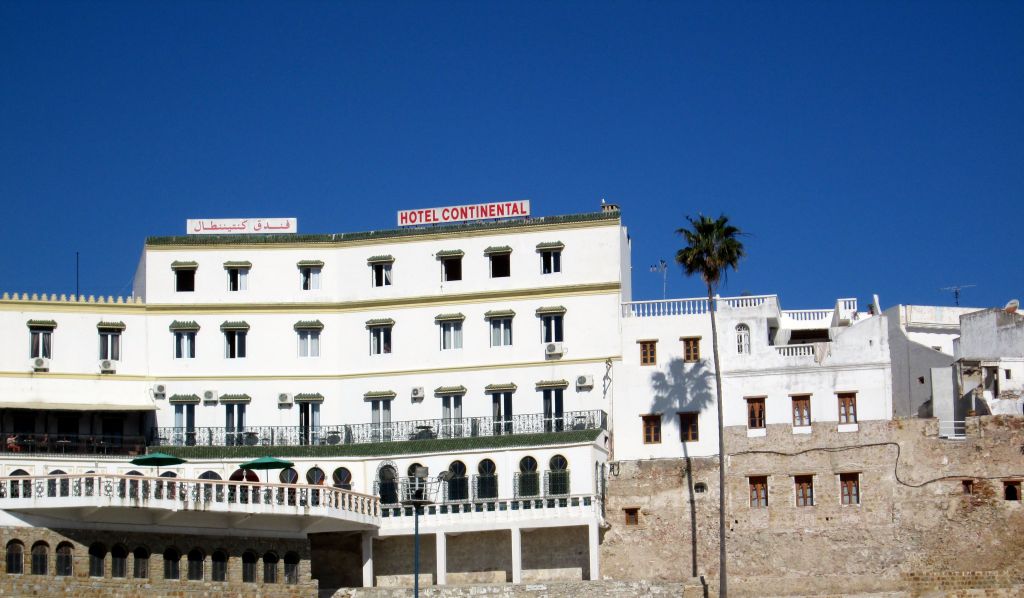
Two hours after getting off the boat in Tangier, I’d booked into the Hotel Continental, which drew me in as soon as I saw it from the ferry; and I’d chosen my new ‘office’ too, the Café Tingis.
It was there at the Tingis that I was to spend a lot of my time, with the sparkling ‘Jono’ and his intriguing côterie.
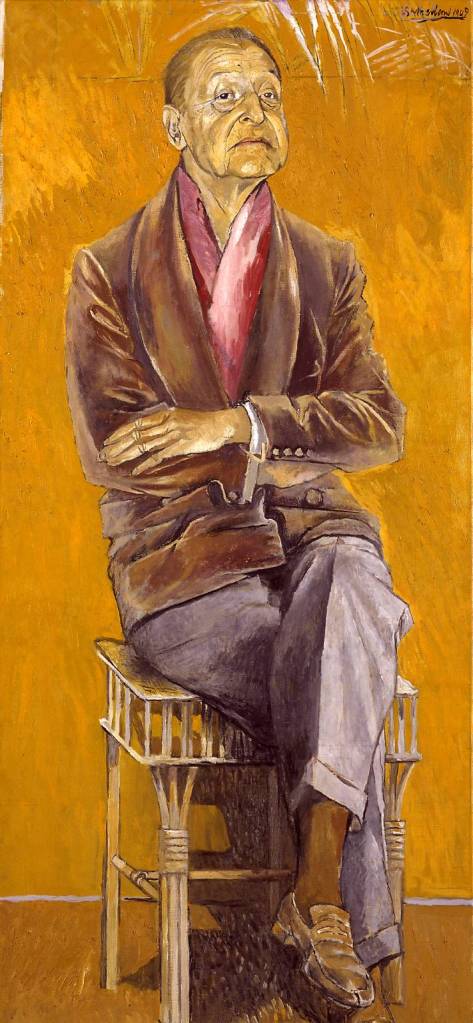
Somerset Maughan described the French Riviera as ‘a sunny place for shady people’, and Tangier, Morocco, is like that too, except there’s more rain in Tangier.
That’s because it’s between two seas, the Atlantic and the Mediterranean, and so the weather is actually quite cold and wet, at least during winter and early spring.
Rainy or not, Tangier has attracted some of the world’s most glamourous, wealthy and talented, including Matisse, Cecil Beaton, Marlene Dietrich, Francis Bacon, Patricia Highsmith, Yves St Laurent, Jean Genet, Jane & Paul Bowles, Tennesse Williams, Barbara Hutton, Mick Jagger, Tahar Ben Jelloun, and Anthony Bourdain.
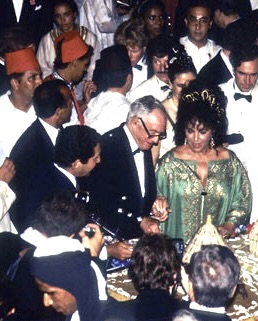
Beat Generation icon and heroin addict William Burroughs lived there for 6 years. (It’s the setting for his nightmarishly ghastly novel, Naked Lunch). And Forbes Magazine dynast, Malcolm Forbes (pictured below in his kilt) co-hosted his vastly lavish 70th birthday party with Elizabeth Taylor in Tangier. (Their guests included Robert Maxwell – father of Ghislane – which hooks us distastefully into current global events, all very ‘now’ ).
But it wasn’t its high-heels-and-low-life reputation that first took me to Tangier. I went because I needed a new project and I’d become dulled by a few months in the village of Tarifa, right down at the southernmost tip of Spain.
From there at night I could see the thrillingly foreign Arabic script الله أكبر, allahu akbar, illuminated gigantically on a hill near Tangier, siren-like, and only a few miles across the Straits of Gibralter.
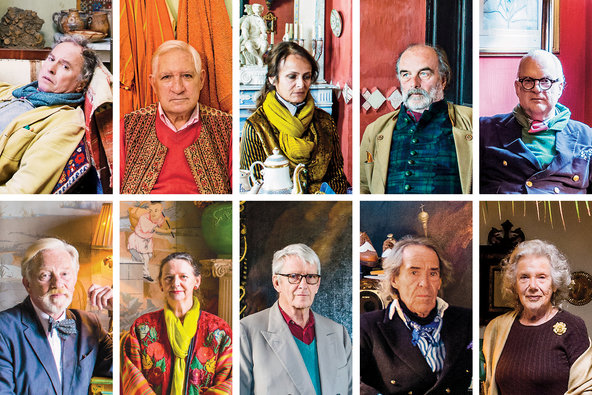
Also, I’d just read an article in the New York Times called The Aesthetes (with the subtitle For the legendary expats of Tangier, a life devoted to beauty reaches full flower in this North African hothouse of history and hedonism ), which fascinated me enough to tie up my little life in Tarifa and get the next ferry across.








 Out There & In Here