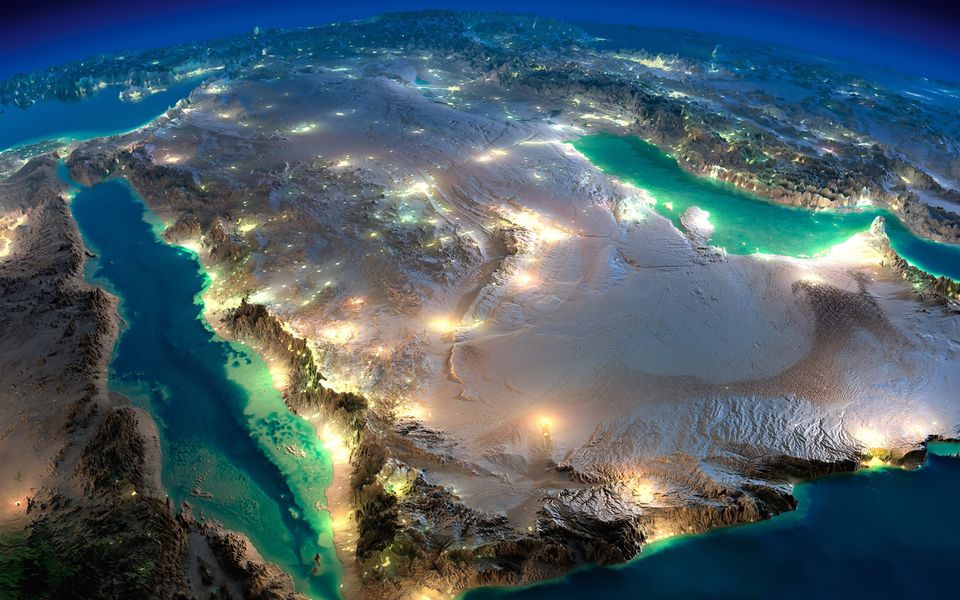
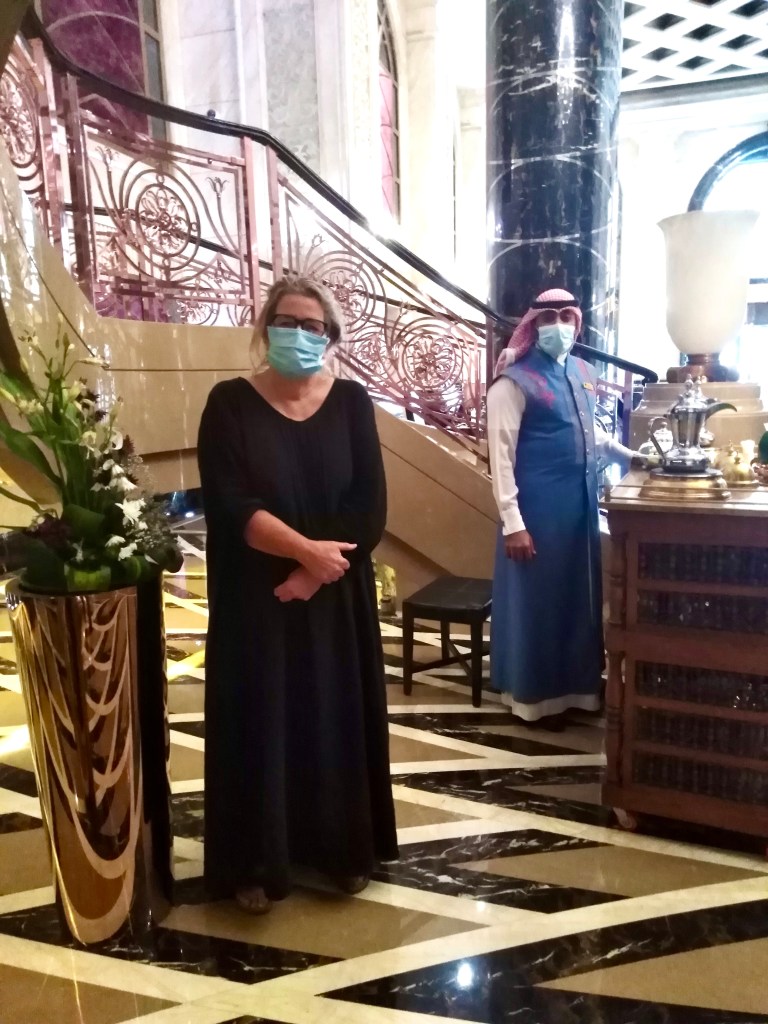
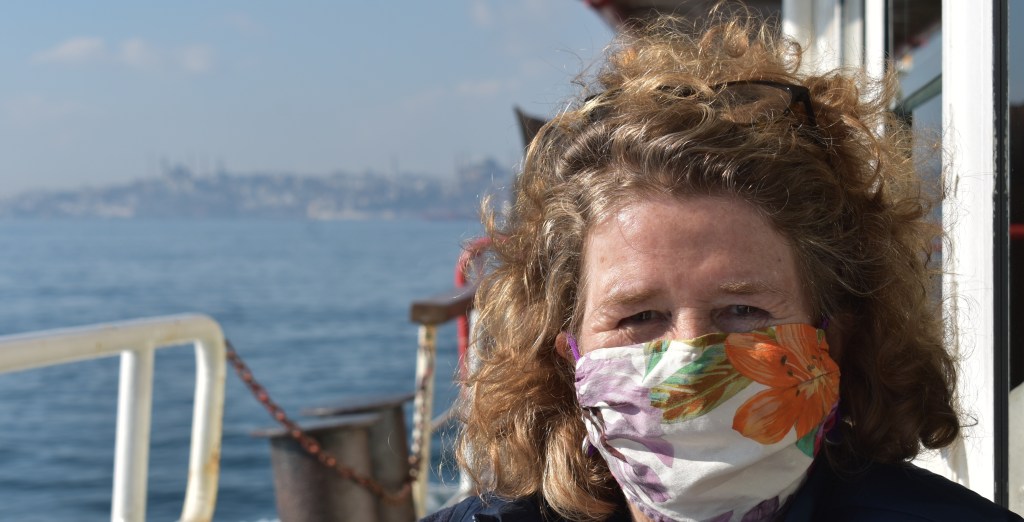
( I lived and taught in various universities in Saudi Arabia for about 3 years, and am planning a visit back for a drive round this autumn. Below is a little about my life there. Thanks G.v.U. for the second photo. )
Access to Saudi people other than my students came through meeting Nick, a writer and journalist from London, who was the editor of ‘Saudi Voyager’, the flagship magazine of the Saudi Ministry of Tourism. Its readers were mainly non-Saudis living in the Kingdom, and Nick and I got on well so he invited me to various press events and social occasions connected to his job.
As usual anywhere, things got moving through word of mouth and gradually I managed to go to talks or events which were mainly targeted towards Saudis.
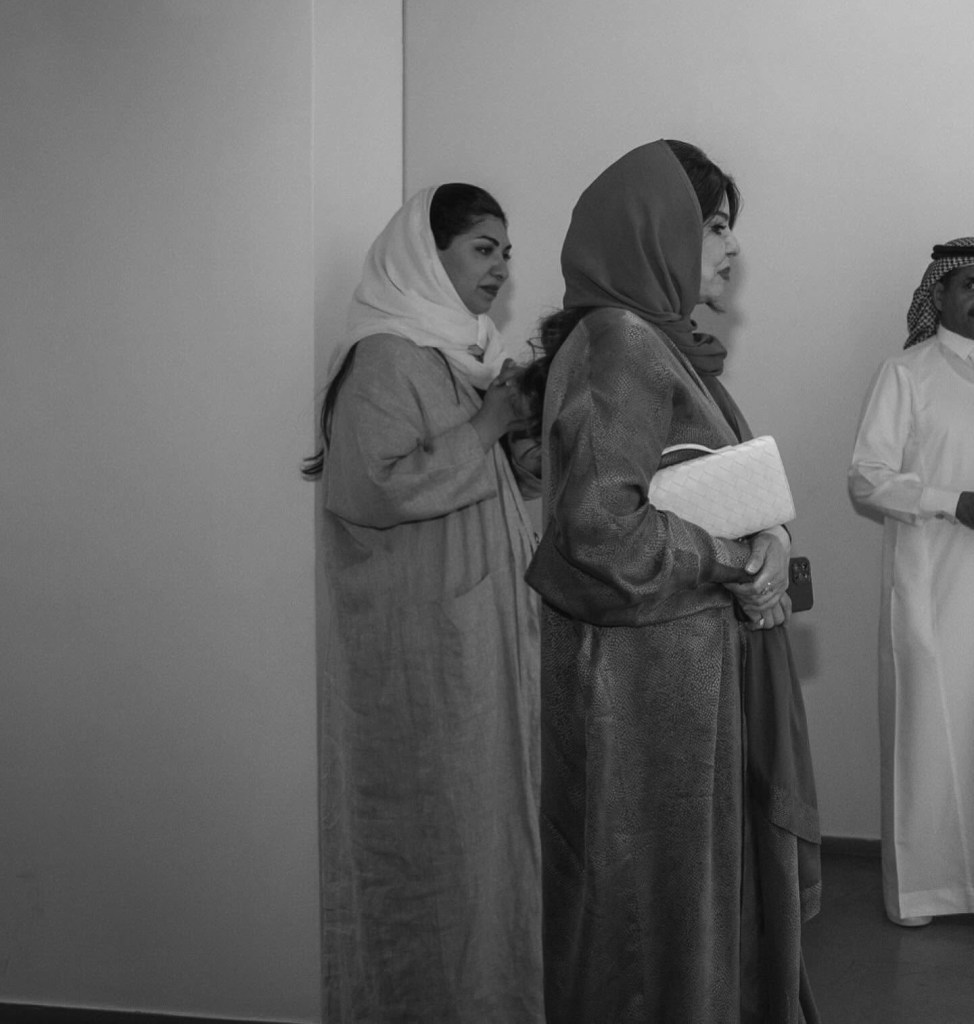
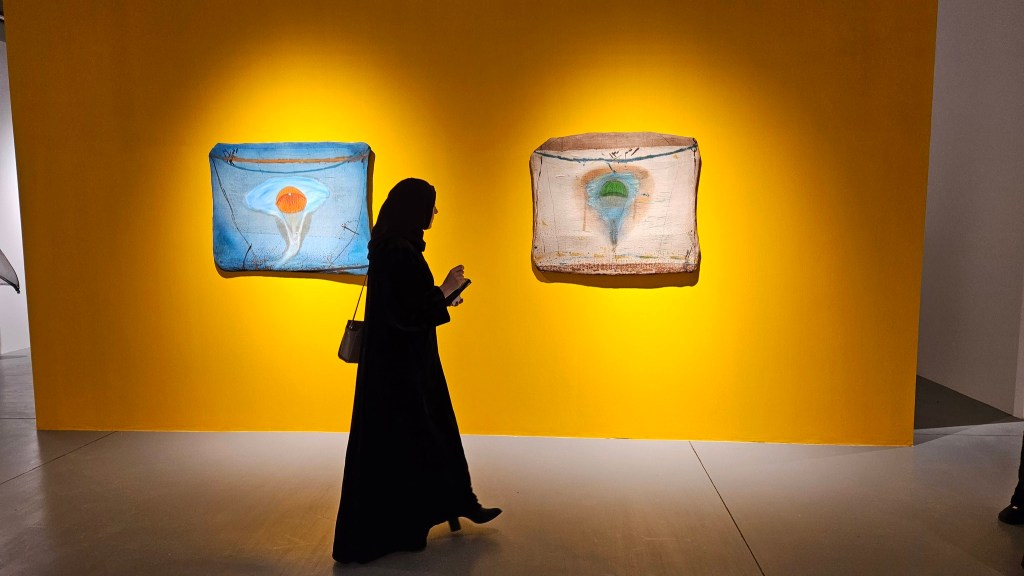
One of the first of these was on Western Art ( about which many Saudis knew very little, just like most of the west still know nothing about Saudi art or artists ) held at the Alãan Artspace by a woman from New York. She and I were the only foreigners there, in a group of very wealthy, well-travelled Saudi women who were vastly elegant and beautiful and rather condescending due to this, but the New Yorker knew her stuff and managed to impress nevertheless.
It was a fascinating opportunity to be at at event where I was a complete outsider, and in the company of people – disdainful as many of them were – I would never have met if I’d not left my previous lives.
I later published an article in Nick’s magazine about the art gallery itself.
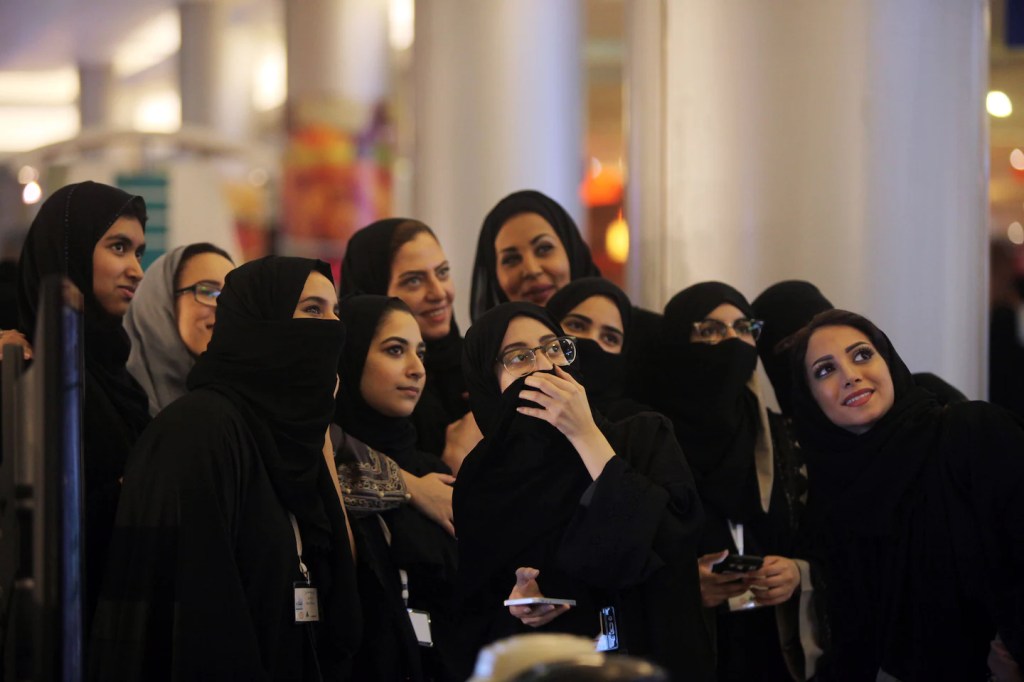
( first contract in Saudi Arabia: teaching English in the capital city of Riyadh, in the world’s biggest university for Muslim women, 2013 )
I would have done anything to be invited into the home of a Saudi person, and that was an extremely difficult ambition to achieve.
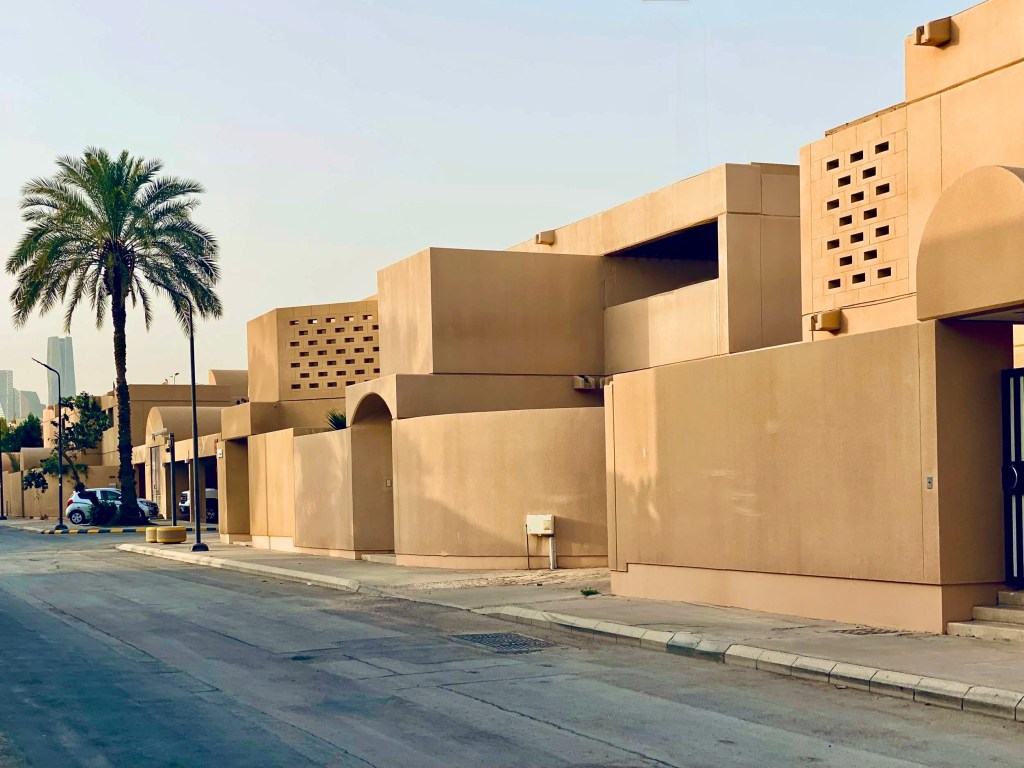
Even the architecture in Saudi gives you an idea of just how challenging this aspiration was. Social, cultural and climatic characteristics mean that privacy is valued highly, and I spent weeks trying to work out how to get some insight into the lives of local people.
As far as I know, most of my 250 colleagues at the university ( from virtually all the English-speaking countries in the world ) never managed this, partly because maybe they didn’t want to, or because there were embassy parties and various other diversions, and we had plenty of friendships – and emnities too – among us all to keep us engaged socially. Also, in my first period in Saudi Arabia, women couldn’t drive, so we were always dependent on drivers to get around, which of course was frustrating and made spontaneity impossible.
I’m happy to report though, that little ways of achieving my ambition started coming in a few weeks after I arrived.
One of the reasons I went to live and work in Saudi Arabia was that I knew nothing about the country, and its hermetic nature intrigued me. Some friends criticised me for my choice due to the ‘Western’ perceptions of Saudi, and of course I had my own limited preconceptions on that topic too.
I’d already seen in my travels elsewhere that stereotypes are rarely accurate and had learnt how there can be elements of foolishness and arrogance on the part of some countries in their affection for dictating to others how to run their own nations. I wanted to have a look at things in situ for myself – if I could.
I lived and worked for a total of three years between 2013 and 2021 in different parts of Saudi Arabia and would like to report a little on my own experiences there, which might contribute towards whittling down the persistent ignorance between cultures and countries (it works both ways of course: I met Saudi women who felt sorry for the lot of European women) .
I’d also like to acknowledge those who were so hospitable to me in Saudi Arabia particularly now that sadly they’re essentially in a war zone.
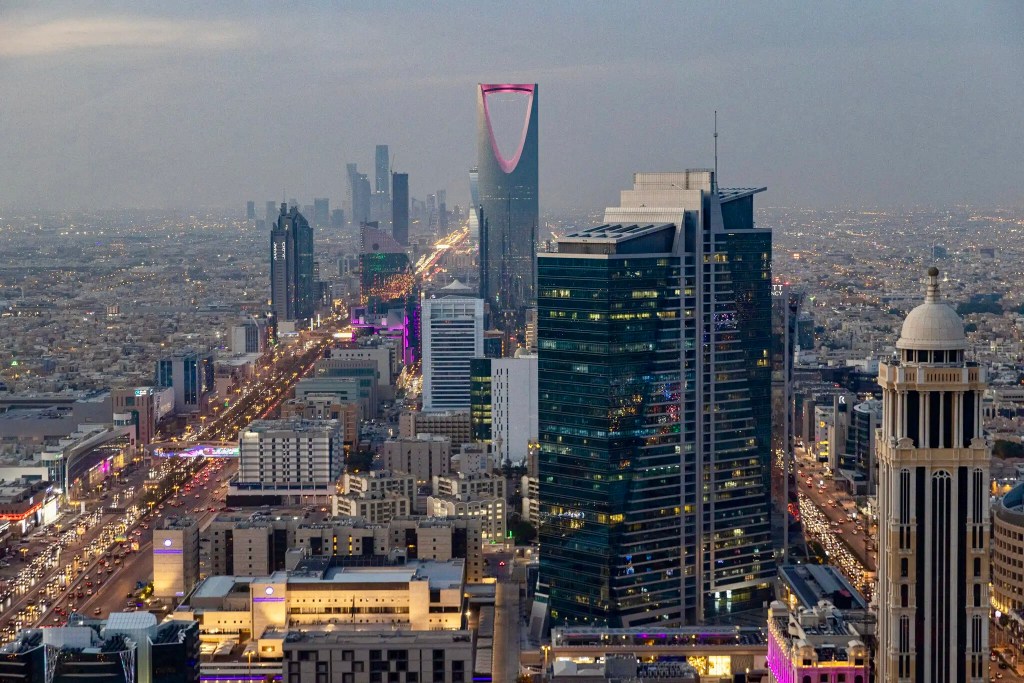
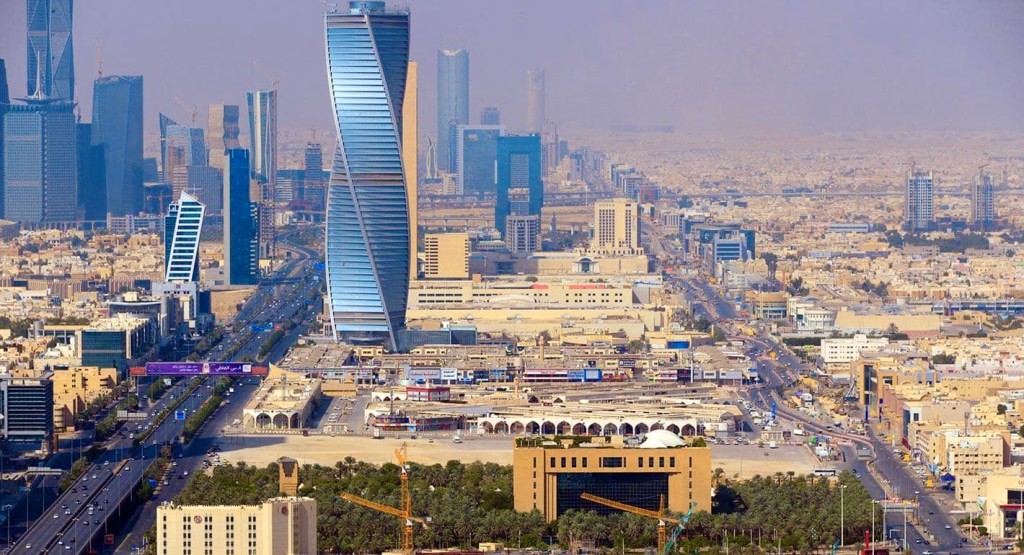
My first job was in Saudi’s glitzy capital, Riyadh (below) in 2013, and the university I was to teach in was brand new, designed by some of the world’s most prestigious architects and was next-gen unutterably beautiful.
A vast amount of money had been invested in this specific institution as part of a national project to boost Saudi girls’ educational levels, and a Western university was given a lucrative contract to set up teaching programmes, recruit qualified faculty members from English-speaking countries globally, monitor examinations and oversee the entire undertaking.
In 2013 Saudi was like most countries at different periods in their socio-economic histories, I suppose. The chance to do foundation year courses as a means to access university education must have been exciting for a lot of our young women students, not perhaps because they admired scholarship (although earning a degree would have been prestigious), but because it got them out of the home and meant they could make new friends and have some independence.
The university I worked in was a public institution, so the students (aged 18) were not vastly rich or even rich at all ; they were certainly not being driven between fabulous palaces or parties in Maseratis or flying to London for the weekend on shopping trips. In many cases, I was told, the students’ parents ( which means their fathers too ) made sacrifices to send their girls to the university.
As far as I managed to find out, the students’ mothers were involved in family life and running their households ( most had domestic staff, some had little home-based businesses ) rather than lunching with friends in fancy shopping mall cafés. Their fathers were civil servants, office workers, policemen, teachers, military staff, small business owners or similar.
° ° ° ° ° °
The first time any parents came into my Saudi life was in my initial week of teaching when one student arrived 90 minutes late for a two-hour class and told me with great melodrama, and to her classmates’ delight:
” Teacher I love you ! Late. Yes late, teacher. My motherr, my fatherr – dead ! “
I was new, I was enthralled by the emotion and intensity of the story, was poor at classroom management and unaware of the fun the students were cooking up, so was briefly horrified and concerned for the recently and unexpectedly bereft student.
” My teacher ! I late, I know. But my motherrrr, my fatherrrr, verry bad crash, the carrrs, the flames ! The police ! My motherr, my father. Dead ! I sad, very sad, late, teacher. I late. Verrry. “
The class chorused the ‘verry’, and one girl even trumped up a few tears of sympathy before the entire group broke into affectionate laughter.
Plenty more tales of classroom hilarity followed, but there are other stories to come, from other Saudi experiences.
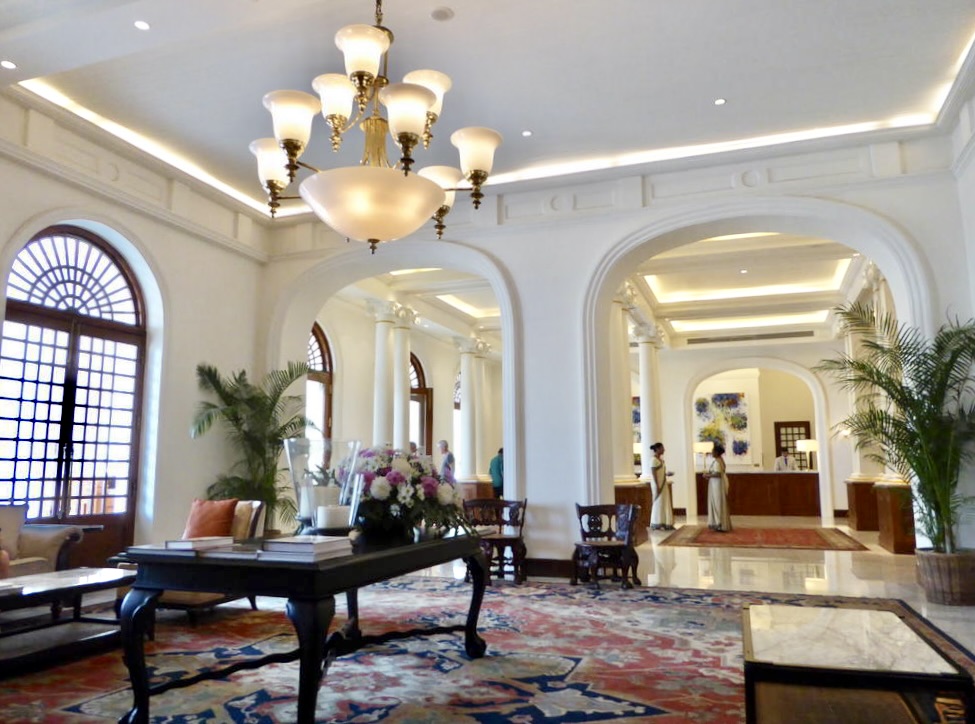
It started in the usual way that you get on your travels if you like talking to strangers, and this particular chat happened last month in the elegant reception hall of the Galle Face Hotel in Colombo, Sri Lanka.
I’d just spent a few pleasant weeks with friends in my usual place, right on the Indian Ocean in the south of the island – at $23 per night, including breakfast – so I was happy to revel in the very different ambient of the Galle Face Hotel (partly designed by a Scottish architect, and frequented by world luminaries for over 150 years ).
I was enjoying the spaciousness of the hotel foyer and its air conditioning, and watching people arriving and leaving when a lady with lustrous, well-cut silver hair, intense energy and beautiful colours, silk and cotton, sat down. An elderly but nimble man was with her, he smiled politely.
The lady moved close to me, conspiratorial like a schoolgirl, as if she’d known me for years:
“Don’t tell anyone but my husband is furious. Don’t draw attention to us. He’s a famous astronomer and they’ve sent a film crew to the hotel to ruin our holiday ! “
She was older than me but felt like a teenager. Healthy, vigorous, quick, lithe amusing and easy to amuse. We chatted a bit about Britain ( where she’d been living for decades although she was Sri Lankan ), she mentioned a trip she’d had in the Highlands and demonstrated an unexpected ability to mimick Scottish accents.
” We’re waiting for the driver: been invited for afternoon tea with the former Prime Minister, the woman. We’re nipping off now quickly so the camera crew don’t catch on. “
The ‘famous atronomer’, who I later discovered online is also an eminent mathematician and pioneer in astrobiology, was Professor Chandra Wickramasinghe MBE, and here are a few lines from a recent interview with him on YouTube:
“We are connected to an infinite source of intelligence and bacteria have intelligence. ….We could be subjects of manipulation through bacteria ingress from space, and ‘the aliens’ we are looking for could maybe all be bacteria. I have an open mind about this….. God to me is the total content of the intelligence in the universe. That would be my god with all its bacteria and viruses and quantum interactions.”
And his lively and charismatic wife Priya was not only waggish, brilliant and friendly, but is the author of various Indian cookbooks, published internationally.
I called her The Inspector because that’s what she felt like the first time I met her. She was English, tall and slim, and a Moslem revert – as many term it – with a spirited intelligent face and a great sense of fun, which you could see from the lines at the sides of her eyes and because she was always smiling, even when you weren’t looking at her.
Of course she wasn’t really an inspector, but her height, breezy mien and vigorus gait gave her the air of someone supervising others in an efficient but friendly way.
Also, although she was a fellow English instructor, most of the time she was in the corridors and not in her classroom, where sulking and insolent students lolled around at their expensive desks, exchanging vapid comments during brief breaks from their compusive phone scrolling.
Most of them -college girls in the Eastern Province of Saudi Arabia – were perfectly pleasant as individuals, but whether you were there in front of them trying to teach them – or not – their behaviour didn’t change much (and there were plenty of good reasons for this, not relevant here).
The more dictatorial of our many bosses were terrified of losing their own jobs if they put a foot out of place, and so were more sycophantic ( and less fun as a result of course ) than we were. It took them a while to notice The Inspector’s characteristics and grasp the potential repercussions of her spirited persona.
When they did, they found her rather difficult to manage, partly because she was cleverer than all of us, and popular, and because she was marvellously unpredictable too.
I haven’t been to Tangier for a few years now and Jono doesn’t live there any more but he sent me a message the other day saying that of course I could mention him in this little blog. I told him I had about 30 readers and we had a good laugh about that.
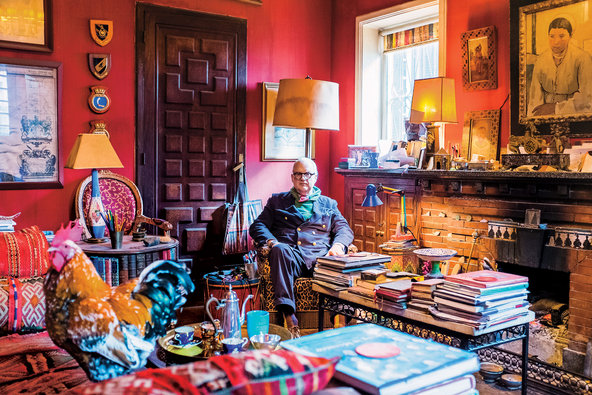
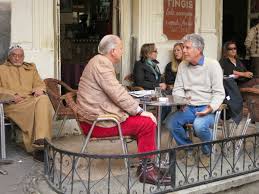
Anyway I’m so pleased we met that day at the faded Café Tingis, that we shared easy and entertaining companionship for a few weeks every time I went to Tangier, that I was a guest at one of his lunch parties ( he had a resident cook and housekeeper, a view acrosss the sea to Europe, and pet cockeral called Gregory Peck ) and that it was all so amusing and light and warm.
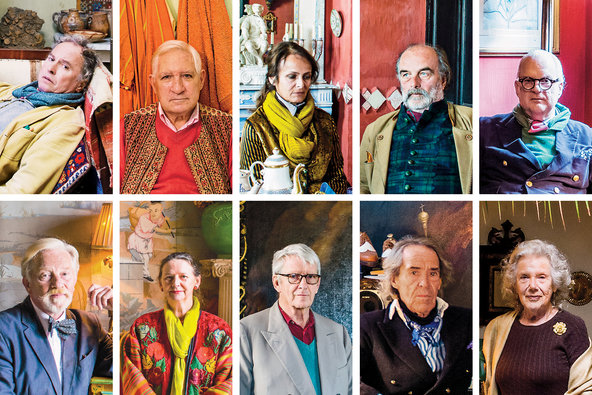
The photo above is Jono in his Tangier home, and then here below he’s photograped top right in the New York Times article that had taken me to Tangier in the first place ( little imagining I’d meet any of the people in the article), and at the bottom, with Anthony Bourdain who – Jono later told me – also met him by chance on the street… :
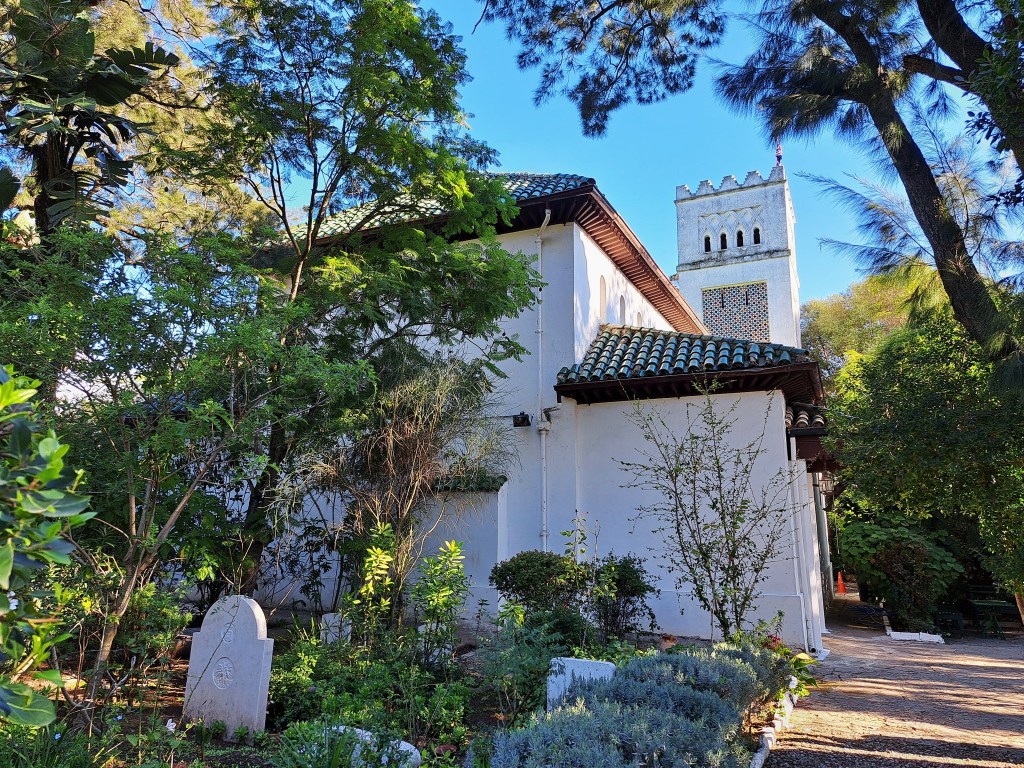
Jono and I went to a service at the St Andrews Church in Tangier one day.
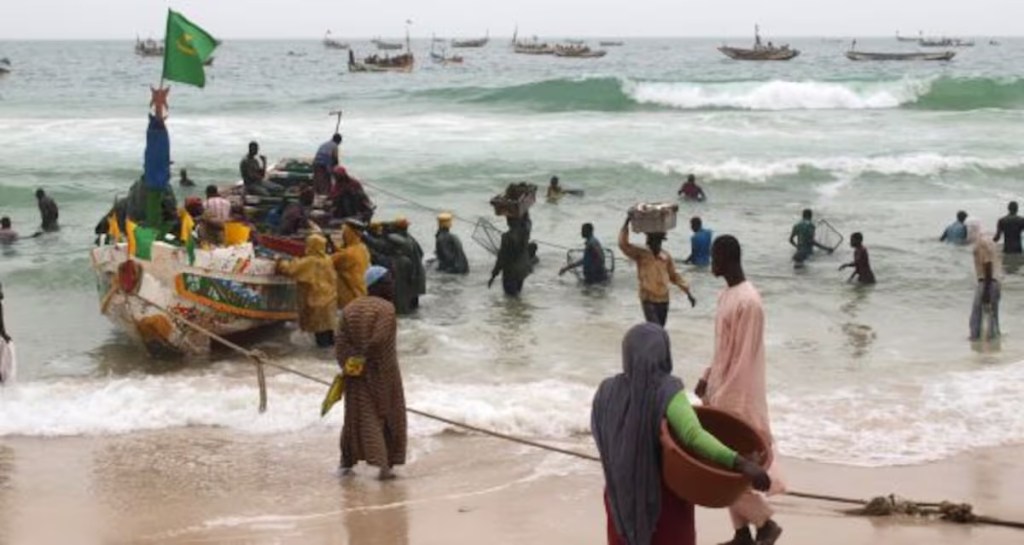
After church we drank cold water in plastic cups and fell in with the vicar and a scraggy cheerful and colourful group of Mauritanians. The vicar was a friendly bon viveur of the colonial type and a terrible snob, who was quick to tell people that he was – at that time – the chaplain to the Queen. He was also quick to make a few comments about our Muslim brethren:
“Watch your purse, and yourself. These people will latch onto you and you’ll never get rid of them..they come triapising all the way up here from Mauritania and try to get on boats across to Spain, only to be turned away by the Moroccan police and sent packing down south again. Then they come back up a few days later. Some of them come to church because they know there’s a bit of money here and some kind of social conscience.”
Jono had the finances, health and leisure to live exactly as he chose, but he had something much rarer too: the imagination to actually do it.
And he did his Tangier daily life well, which is what I loved most about him.
Soon after our first meeting, he and I got into a tacit loose-fitting kind of arrangement which meant sometimes meeting at the Tingis Café, sometimes at the Cinéma Rif, sometimes at the French bookshop, or even just on the streets, and none of it ever by arrangement.
” I’m terribly spoilt, you know. Pa left me quite a lot of lolly a long time ago now, so I just stopped working. Used to be a journalist, bit of a hack, to tell you the truth. Lived in Cairo for a while, fascinating place, have you been? I first came to dear old Tangier 30 years ago, was sent out by my paper in London on a story about artists here. Never left, really.”
Living and working with 250 English-speaking women colleagues on a gated campus in Saudi Arabia was quite an experience, and to this day makes me question many aspects of ‘the sisterhood’, and a lot else.
The confining conditions – think Mallory Towers meets Alcatraz – sometimes brought out the worst in us all, and the financial stakes (described by one wag as ‘the money addiction’) were high, which added to the stress.
* * *
Nevertheless, the experience was highly entertaining a lot of the time, many colleagues were talented, clever and funny, and some inconsequential story or another was always on the go. Once or twice though, there was an exceptional event involving an exceptional character.
One such was called Morag, and as soon as she arrived, she advertised an already-opened packet of porridge oats on our staff intranet for 50 cents, which was derided as weird and miserly, and much criticised at the time.
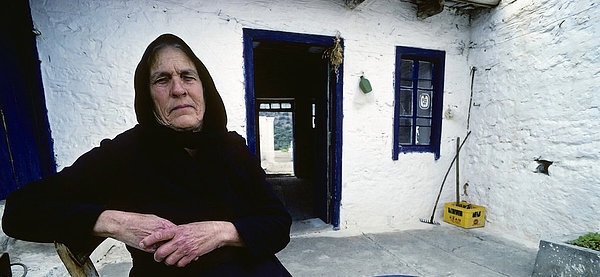
Obviously Morag was flat broke and gossip quickly fired up and darted through the university about her supporting some boyfriend or another on a Greek island, plus his mother ( her name was even mentioned in some versions, Sophia ).
* * * *
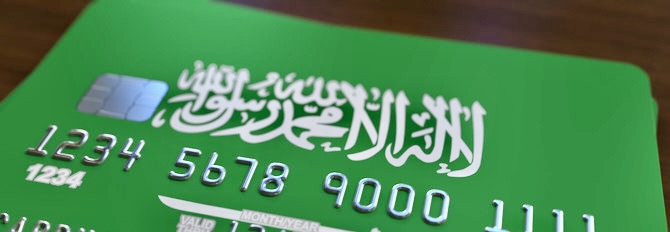
Morag began her contract just when a well-known Saudi bank opened a branch on campus, and they were giving out credit cards to anyone who asked. We all had good salaries and were working for the same university, so it was easy and quick to get a card, with generous credit on it too.
She might have been penniless, but Morag was neither daft nor slow. Within weeks, she managed to get two Visa cards, pocket the substantial credit (rumoured to be around $20,000) and leave the country on the next flight out.
Of course there was a lot of finger-wagging afterwards, but once that was over, Morag’s reputation acquired the secret admiration and sparkle that the crafty fly-by-night often tends to enjoy.
She was last sighted two years later in expensive clothes on Berlin’s Kurfürstendamm, sans boyfriend (and sans Sophia).